Technology

A proven platform for tyre-to-material recovery

XPYRO's patented continuous pyrolysis process converts end-of-life tyres into pyrolysis oil, recovered carbon black and steel, with the process gas supplying its own heat. Demonstrated at a 10 tonne-per-day pilot plant in Trondheim, Norway.
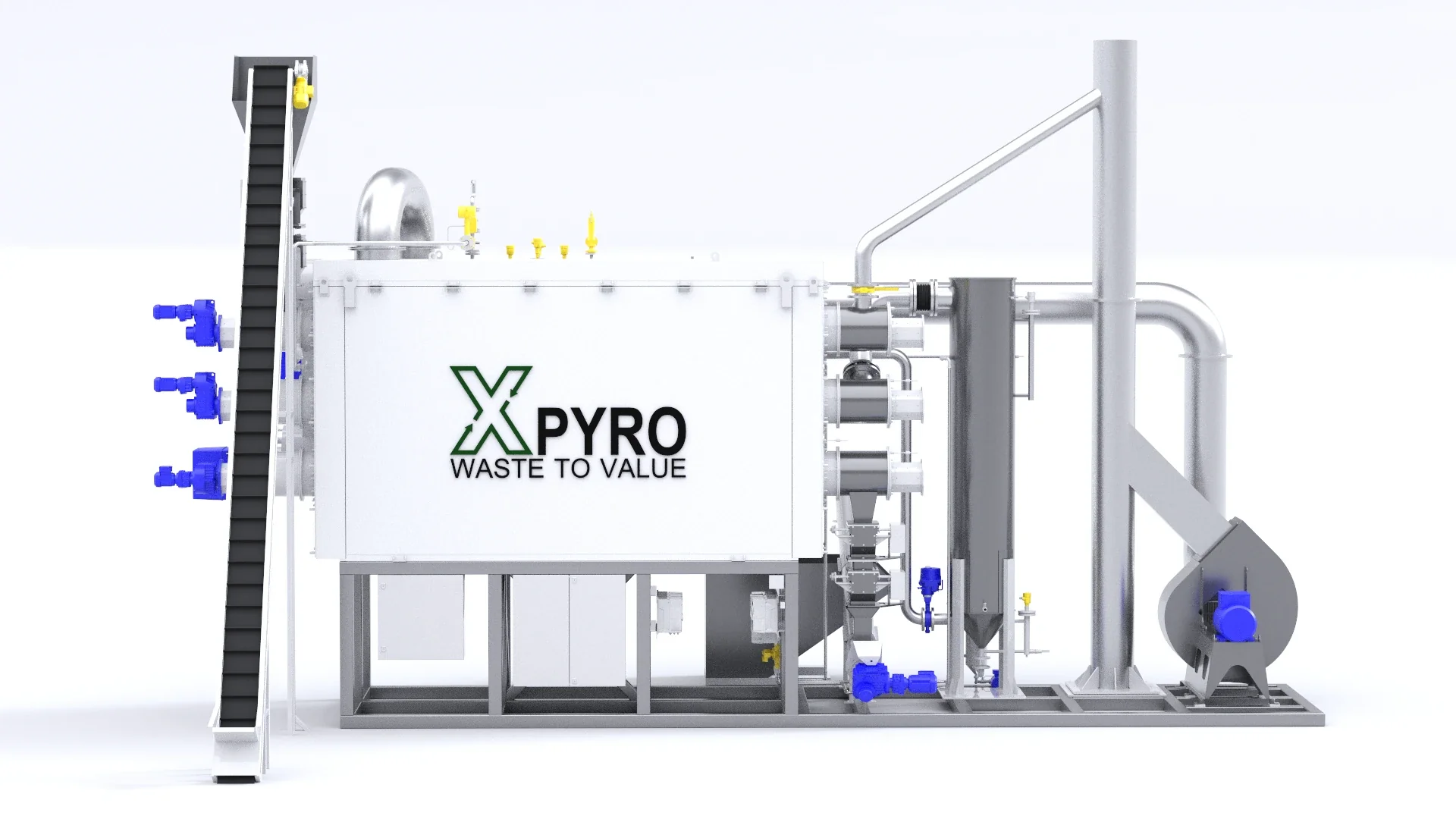
3D model of the XPYRO pyrolysis plant: feed conveyor, insulated reactor, condensers and stack

Converting a waste liability into industrial feedstock

XPYRO's process is a self-sustaining, continuous pyrolysis technology engineered for industrial-scale operation and the highest safety standards. Its differentiation lies in integration: a multi-auger reactor with zoned temperature control, full recovery of process gas and steam, and a modular plant design that can be deployed as regional units close to the tyre collection point.

At a glance

Process
Continuous pyrolysis, oxygen-free
Reactor
Multi-auger, steam-integrated
Operating window
450–600 °C, zoned
Feedstock
Tyre chips, 20–30 mm
Energy
Self-sufficient on process gas
Unit size
10 t/day modules
IP
Patent granted (NO); PCT and EP filed

Process

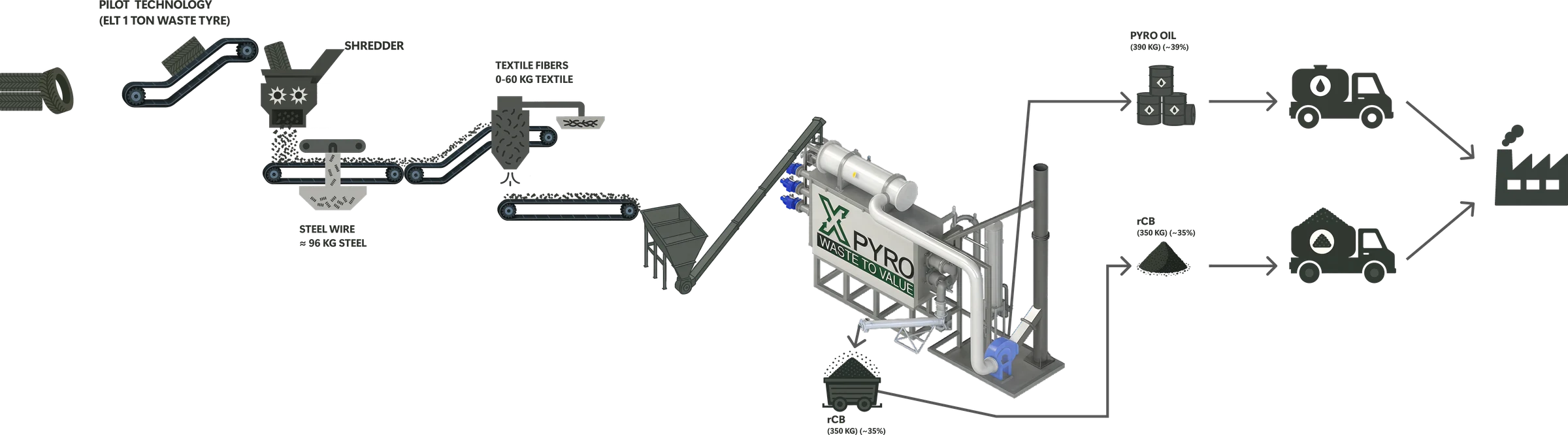
From tyre chips to products in six steps

  1. 01

    Feed preparation

    End-of-life tyres are shredded to 20–30 mm chips – a coarser feed than most processes accept, reducing pre-treatment cost.

  2. 02

    Sealed feeding

    A conveyor and double-flap airlock feed the reactor continuously while excluding oxygen.

  3. 03

    Thermal conversion

    Three stacked augers carry the material through a furnace-heated hot box at 450–600 °C, with each zone controlled independently.

  4. 04

    Oil recovery

    Pyrolysis vapours are condensed and the oil collected; the non-condensable gas continues to the furnace.

  5. 05

    Energy recovery

    The process gas fires the furnace and flue-gas heat raises steam, which is returned to the reactor – no external fuel in operation.

  6. 06

    Carbon and steel recovery

    The carbon-rich solid is discharged through a cooled auger and airlock; steel wire is separated for recycling and the carbon finished into recovered carbon black.

Illustration of the XPYRO process from tyre reception to products

Advantages

Engineered for stable, long-run operation

1

Multi-auger reactor

Tighter residence-time control and less char attrition than a rotary kiln; tolerant of the steel and textile content of tyre chips.

2

Defined operating window

Zoned temperature control reduces batch-to-batch variance – the basis for consistent product quality.

3

Full energy integration

Process gas and waste heat are recovered in full, lowering operating cost and the CO₂ footprint of the products.

4

Modular deployment

10 t/day units scale by addition. Regional plants of 5–10,000 tonnes a year can be sited at the waste source, with PLC/HMI automation and remote monitoring built in.

Why this design, and not a rotary kiln

How the XPYRO reactor differs from the rotary-kiln pyrolysis plants in common use.

DimensionRotary-kiln plantXPYROWhat it means
ReactorRotary kilnMulti-auger, steam-loopedTighter residence-time control; less char attrition
Temperature control500–550 °C450–600 °C, zonedProduct slate can be tuned to the buyer
Feed preparation< 30 mm shreds20–30 mm chipsLess shredding energy and pre-treatment cost
Energy integrationPartial gas recycleFull gas + steam recoverySelf-sufficient heat; lower operating cost and CO₂
Deployment modelLarge centralised plantsRegional 5–10 kt/y modulesSited at the waste, not at the port

Pilot plant · Heimdal, Trondheim

10 t/day pilot plant in operation

Designed and built with Inrigo AS, supported by Innovation Norway, and operated with SINTEF Energi and Ragn-Sells as industrial partners.

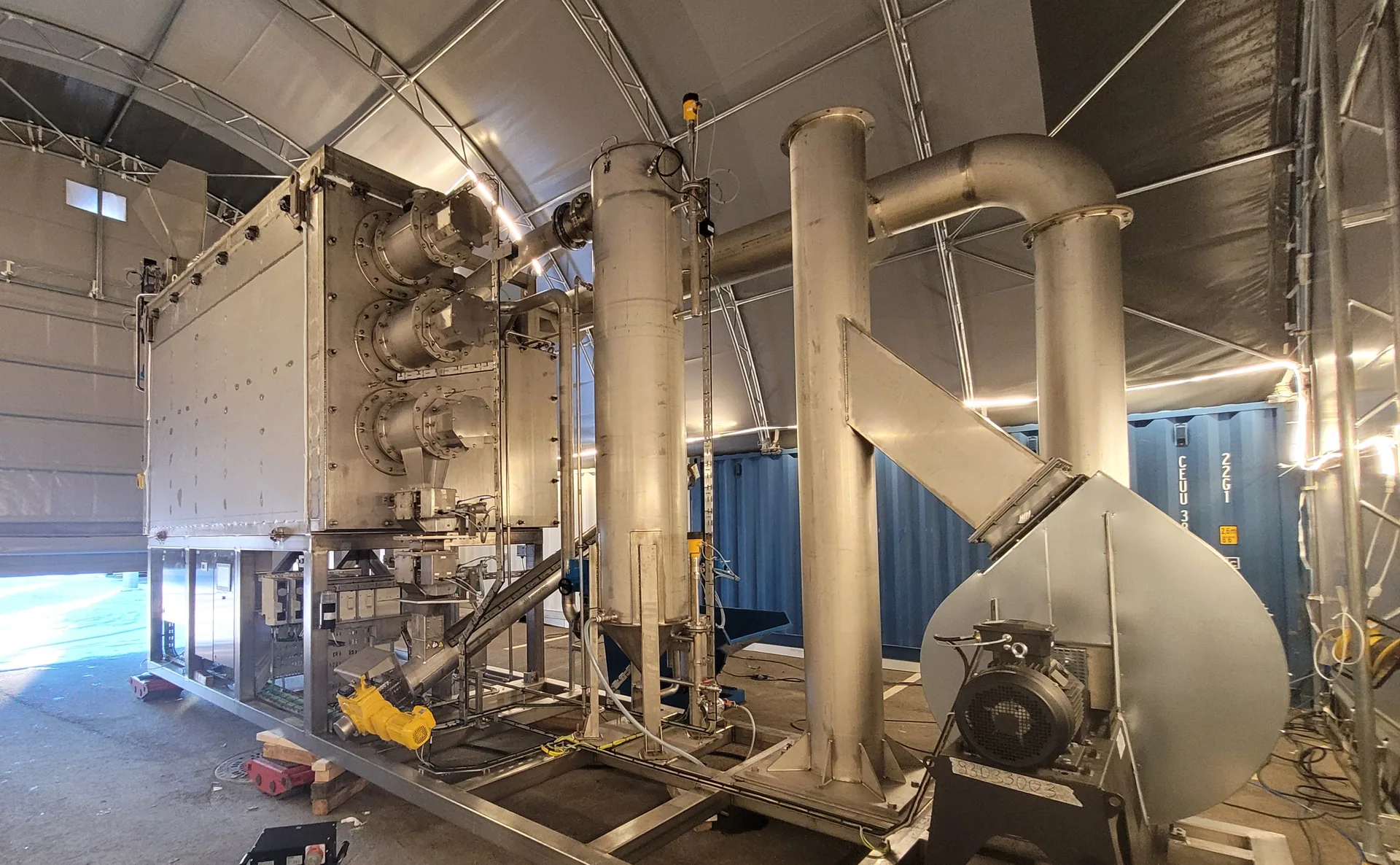
The XPYRO pilot plant installed at Heimdal: reactor, condenser columns and syngas fan
10 t/d
nominal capacity
2025
commissioned and tested
3
industrial partners

Development milestones

2020–2021Concept, Innovation Norway grant, patent filed
2022Second-generation reactor design with SINTEF Energi
2023Ragn-Sells partnership; scale-up to a 10 t/day pilot
Jan 2025Demo facility installed and commissioned
Dec 24 – Mar 25Plant testing programme completed
8 July 2025Pilot run on tyre chips, 200 kg fed in 10 batches
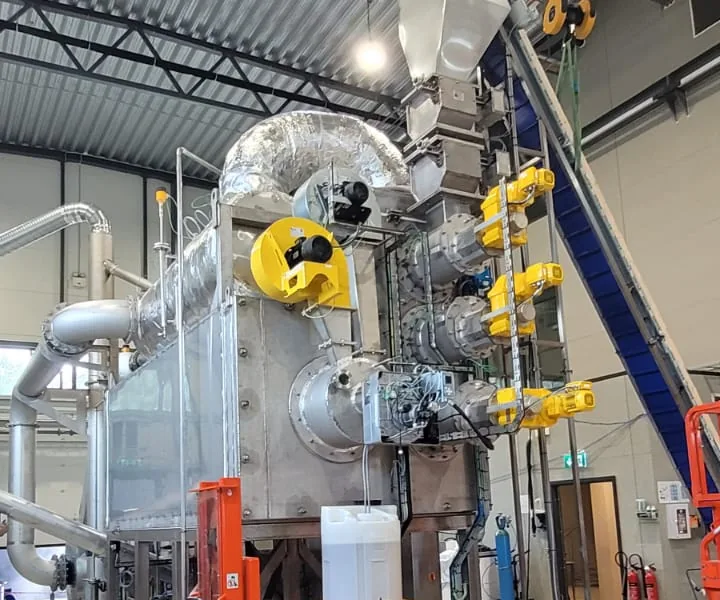
The plant during assembly and factory acceptance testing at Inrigo's workshop
Assembly and factory acceptance testing, Inrigo workshop
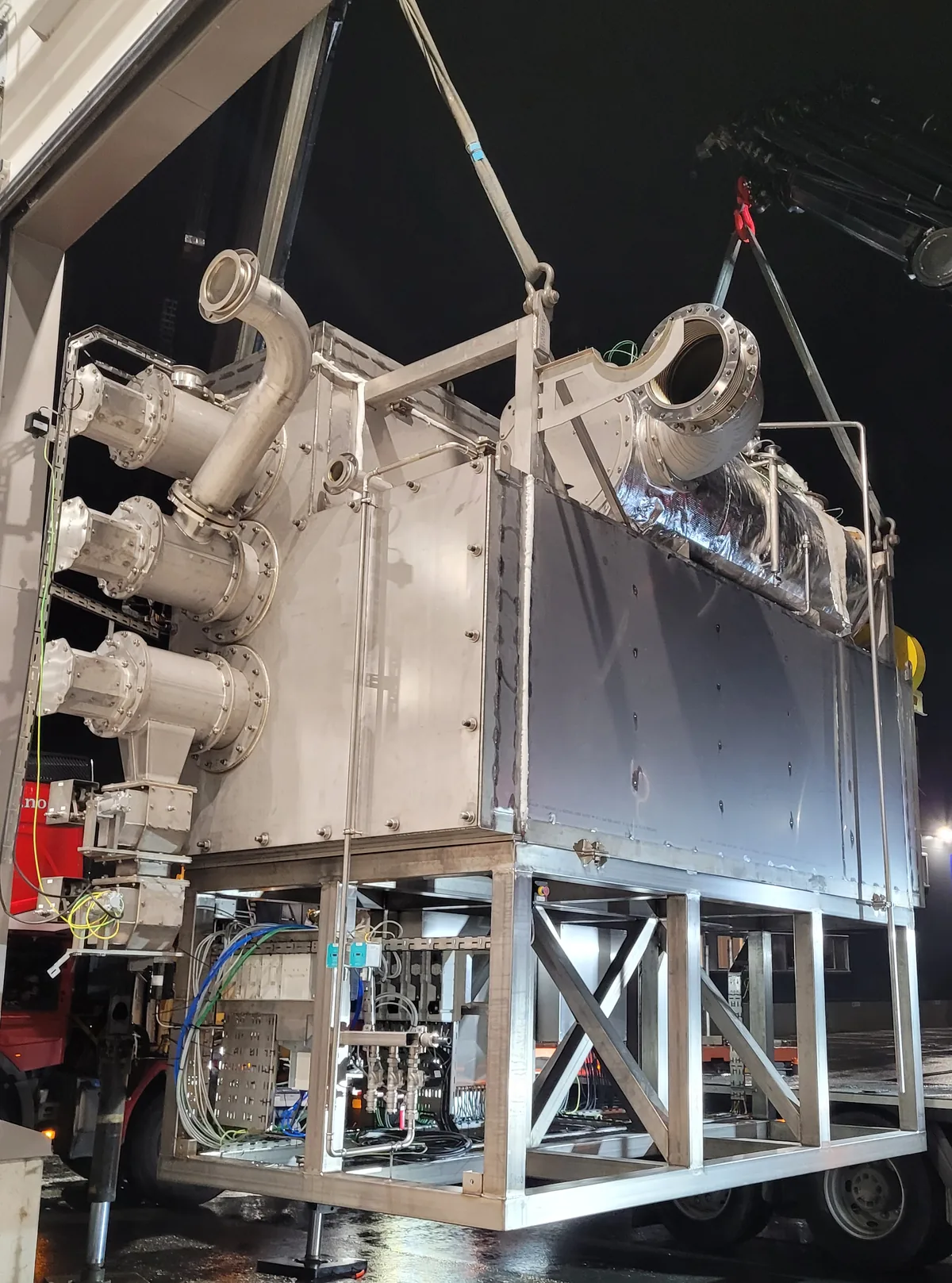
The reactor module being lifted by crane during installation
Reactor module in transit to the test site
Plant specifications
Location
Heimdal, Trondheim, Norway
Nominal capacity
10 tonnes per day (400 kg/h)
Reactor
Three-stage auger reactor, furnace-heated
Operating temperature
450–600 °C, zoned
Feedstock
Tyre chips, 20–30 mm
Energy
Process gas with steam recovery; LPG for start-up
Control
PLC/HMI, full instrumentation, remote monitoring
Partners
Inrigo AS, SINTEF Energi, Ragn-Sells

Results

Pilot performance

40–45%
pyrolysis oil
~35%
recovered carbon black
~10%
steel
Balance
process gas, used internally

Indicative yields by weight from batch-fed pilot runs. Product characterisation has been carried out by SINTEF Energi, Inrigo and Norner AS (oil ~40–42 MJ/kg, 180–340 °C boiling range; carbon 81 ± 5 wt% C, ~18 wt% ash). Qualification against customer specifications on representative production lots is in progress – see Products.

Development roadmap

Now

Product qualification

Analytical programme on representative lots, rubber-compound screening, and safety and regulatory documentation.

Next

Continuous demonstration

Continuous feeding with replicated runs, closed mass and energy balance, and permitting for the demonstration case.

Then

First commercial plant

A 50 t/day plant with offtake agreements secured ahead of commissioning, followed by licensed regional units.

Products and specifications Partner with us

Intellectual property

A patented process

The XPYRO process is protected by a Norwegian patent granted in June 2024, an international PCT application published as WO 2023/128769 and a European application published as EP 4457299 – the basis for licensing and deployment beyond Norway.

Origin

Developed by Inrigo, commercialised by XPYRO

Inrigo AS developed the technology, validated it with SINTEF Energi at laboratory scale and built the 10 t/day pilot plant with support from Innovation Norway. XPYRO AS was established as a spin-off to license and deliver the technology to the market.